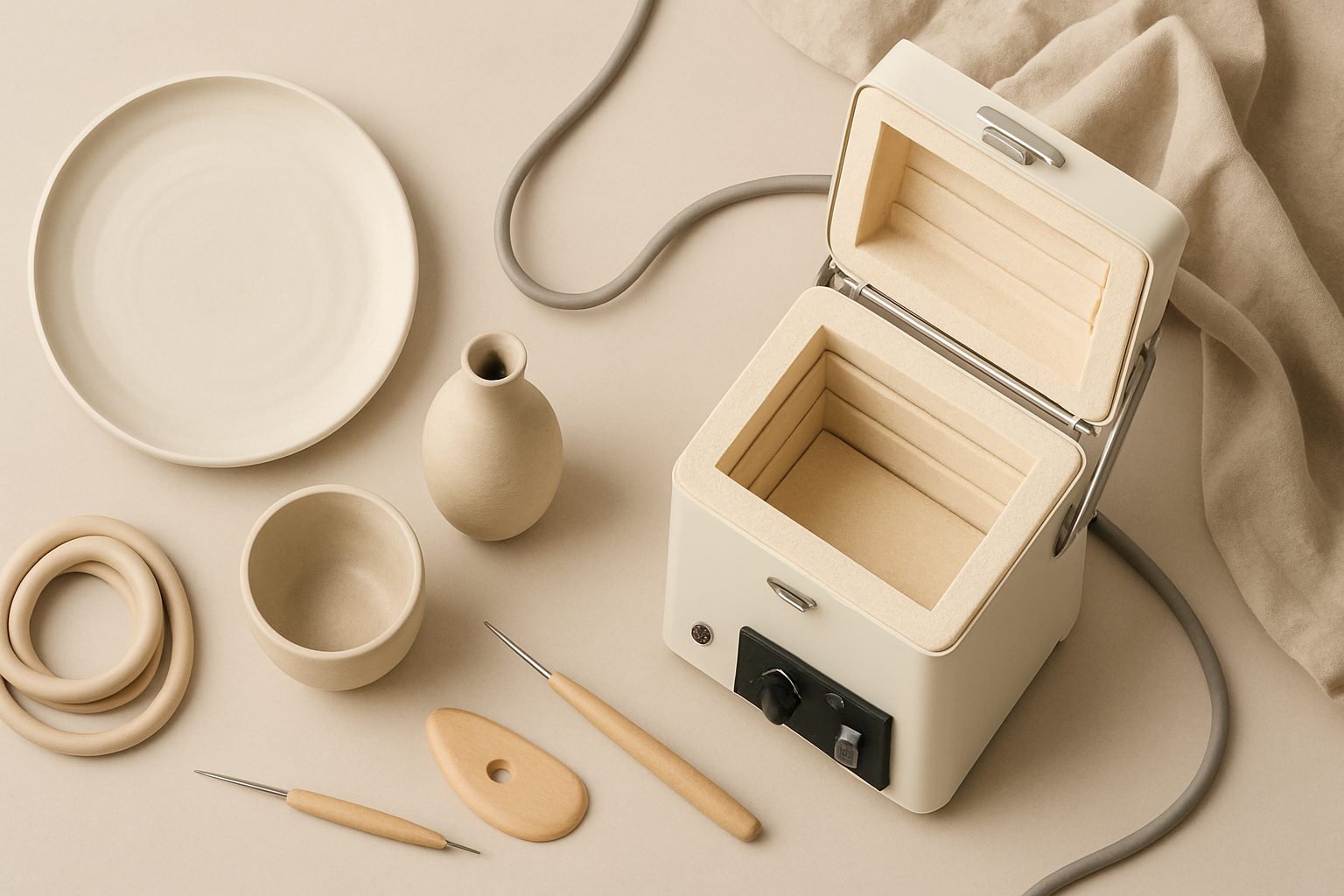
Best Home Pottery Kilns UK (2026): Top Electric Kilns Reviewed
Choosing a home pottery kiln is a significant investment—not just financially, but in terms of studio space and setup. Electric kilns dominate the UK home pottery market because they're safer than gas, more controllable than wood, and fit into domestic buildings without specialist ventilation. But wattage, chamber size, and controller type vary wildly, and UK prices swing from £800 to £5,000+. This guide cuts through the marketing to show you what actually matters when you're picking between genuinely available electric kilns for home use.
What Matters in a Home Pottery Kiln
Before comparing specific models, understand the three pillars: size, power, and control.
Chamber size is how much pottery you fit per firing. A 0.1 cubic metre kiln holds roughly one small shelf of mugs or tiles; 0.3 cubic metres lets you fire a week's hand-building work at once. Bigger kilns heat slower and cost more to run.
Wattage determines heating speed and maximum temperature. Most home potters fire to 1240°C (cone 6), which suits earthenware, some stoneware, and mid-fire glazes. A 2.4kW kiln reaches cone 6 in 6–8 hours; a 4.5kW version does it in 4–5 hours. Higher wattage isn't always better—it depends on your schedule and electrical supply. Many UK homes can only safely run 13A (3kW) circuits continuously.
Controller ranges from manual pyrometers (you guess when it's done) to full digital PID systems (precise, repeatable firings). Mid-range potters usually prefer simple kiln-sitter mechanisms or budget digital controllers—they're reliable and less fussy than expensive programmable systems.
Budget-Friendly: £800–£1,500
Evenheat Kiln 3000 series sits at the entry-level without being toy-like. It's 0.05 cubic metres, narrow (right for apartment studios), and uses a straightforward kiln-sitter that trips when temperature reaches cone 6. Fires reach 1250°C reliably. At around £1,100 UK retail, it's genuinely affordable, but the tiny chamber limits batch firing. Good if you're testing whether pottery is a lasting hobby.
Paragon Artisan (0.08m³, 2.4kW) costs roughly £1,200–£1,400 and includes a basic digital temperature readout. It's slightly roomier than the Evenheat, heats efficiently, and works on a standard 13A circuit. Owners consistently report it's predictable—helpful when you're still learning glaze chemistry.
Mid-Range: £1,500–£3,000
Baffle Box Terra (0.15m³, 3.5kW) costs around £2,000 and is popular with UK hobby ceramicists. It's portable enough to fit a spare room or garage corner, has a removable element design (saves money if one fails), and uses a manual kiln-sitter with a dial pyrometer. Capacity's solid—you'll fire your week's hand-building plus some slab tiles. The 3.5kW draw sits comfortably on most domestic 16A circuits.
Rohde Compact series (0.2m³, 4.5kW) comes in around £2,200–£2,600. This is where you get faster ramp times (useful if you're impatient) without premium pricing. Rohde's built a reputation for reliability in small studios. The extra wattage does mean checking your electrical supply, but worthwhile if you fire weekly.
Kilncare Studio Electric (0.18m³, 3.6kW) sits at roughly £2,400 and includes a Dawson digital controller, so firings are repeatable—important if you're selling work and need consistency. It's heavier to move than the Baffle Box, but the precise temperature management pays off over time. Popular with potters who sell at markets.
Premium: £3,000+
Skutt KilnMaster 8 (0.23m³, 4.5kW) costs £3,200–£3,600. This is semi-professional gear for serious hobbyists. It includes a full programmable digital controller, variable-rate firing (ramp up slowly, hold steady, cool gradually—different glazes need different profiles), and heavy-duty kiln furniture. Overkill if you're firing once a month, but essential if you're experimenting seriously or teaching.
Nabertherm NK series (0.28m³, 6.0kW) sits at the premium end—£4,200+—with European engineering and outstanding build quality. It's designed to last 10+ years of daily use, though few home potters fire daily. Worth considering only if you're treating this as a permanent studio investment and have three-phase power available (not standard in UK homes).
Practical Considerations for UK Homes
Electrics matter more than specs. A 4.5kW kiln running continuously draws 19.5 amps—most UK homes run 32A mains, which sounds ample until you add the kettle. Check your circuit capacity before buying; underestimated wattage is the commonest regret.
Ventilation isn't optional. Even electric kilns release moisture and trace fumes. A simple inline extractor fan (£40–£80, 100mm ducting) pointed out a window prevents glaze bloom and keeps your studio comfortable. Ignore this and you'll get glaze haziness and a damp smell.
Kiln furniture costs more than people expect. A new 0.15m³ kiln plus shelves, stilts, and kiln wash runs £2,500+, not £1,500. Budget 20–30% of kiln cost for the kit to actually use it.
Insurance and safety. Tell your home insurer you've installed a kiln. Some policies exclude it; others add a small premium. Run your kiln during the day when someone's home—unattended firings are a fire risk, however rare.
The Honest Bottom Line
For most UK home potters firing weekly or fortnightly, a 0.1–0.2m³ kiln at 3.5–4.0kW (£1,500–£2,500) is the sweet spot. It's big enough to feel worthwhile, small enough to fit a corner and run without rewiring, and powerful enough to reach firing temperature in a workday. Cheaper kilns work but feel cramped; pricier ones add features you'll rarely use.
Buy from a supplier with UK support—repairs and element replacements are easier with someone local. Test-fire before you commit if possible; many UK pottery suppliers offer kiln hire or rental to help you decide.
More options
- Electric Pottery Kilns (Top-Loaders & Front-Loaders) (Amazon UK)
- Tabletop & Small Ceramic Kilns (Amazon UK)
- Kiln Furniture & Shelves (Amazon UK)
- Pyrometric Cones & Kiln Temperature Accessories (Amazon UK)
- Kiln Vent & Ventilation Systems (Amazon UK)