Best Pottery Kilns for Beginners UK: Easy, Safe & Affordable Picks
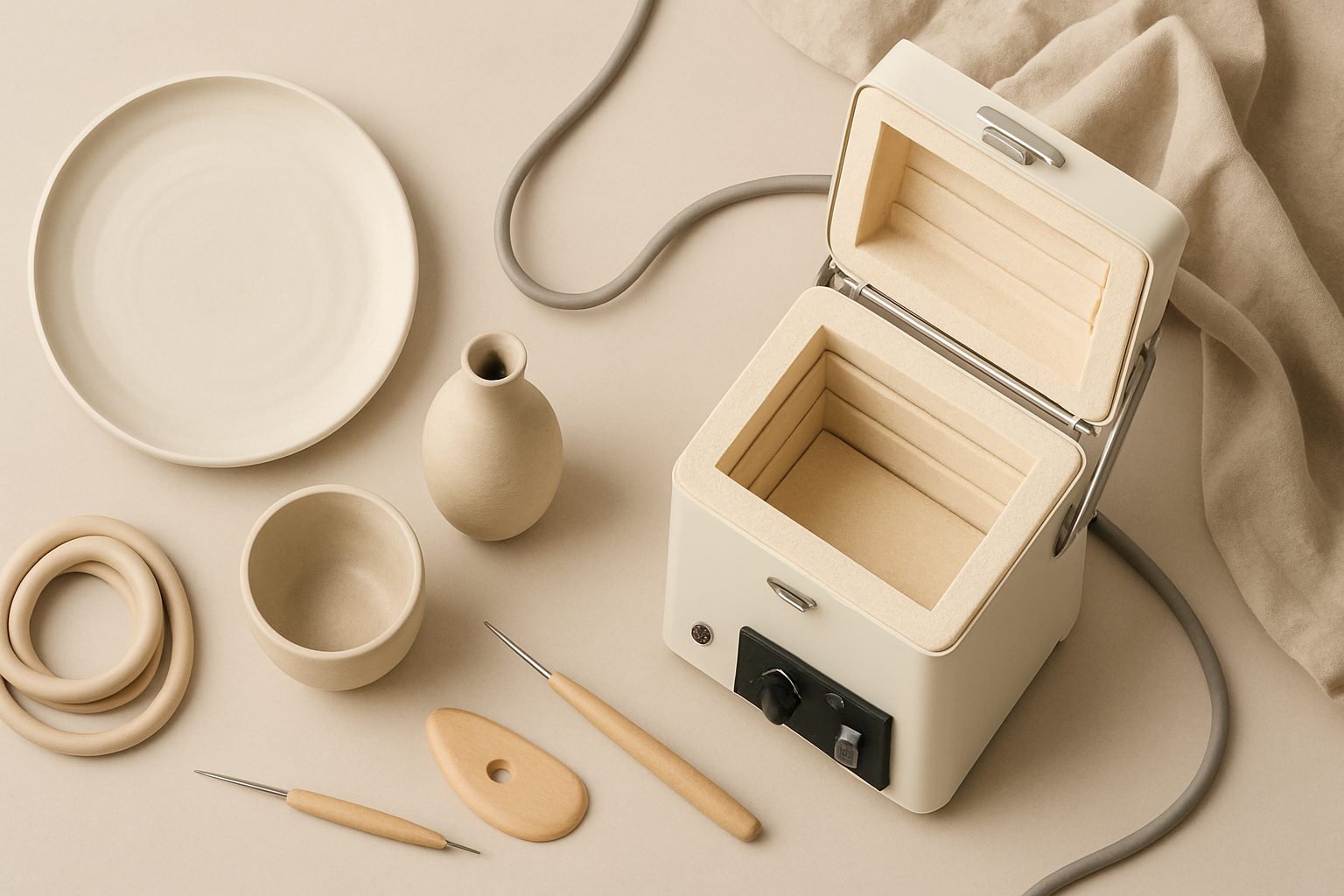
Starting pottery at home needn't mean waiting for studio access or paying per-firing fees. A decent beginner kiln transforms your practice, but choosing the wrong one—too large, too temperamental, or missing safety basics—can waste money and frustration. The best pottery kiln for beginners uk combines manageable size, foolproof controls, and proven safety features, ideally with a package that includes essential furniture so you can start firing immediately.
Why Kiln Size and Controls Matter for Beginners
Chamber size is your first decision. Small kilns under 40 litres suit beginners because they heat faster, use less energy, and fit a meaningful amount of work—typically 15 to 20 small pieces per firing. Larger chambers stay off longer and cost more to run until you're confident enough to fill them.
Digital controllers are non-negotiable now. They handle temperature ramps automatically: you tell the kiln what temperature you want and how fast to get there, and it manages the elements. Manual kilns demand pyrometer skills and spot-checking—fine for experienced potters, but new makers benefit from the consistency. Look for kilns with pre-programmed firing schedules for cone 6 stoneware, cone 10 stoneware, and earthenware at minimum.
Safety cut-offs prevent disasters. A kiln that shuts off automatically if the temperature overshoots, or if a thermocouple fails, keeps your workspace and your pieces safe. Many beginner kilns now include over-temperature protection as standard.
Electric vs. Gas: What Works for Home Studios
Electric kilns dominate the UK beginner market, and for good reason. They need only a standard 13-amp plug socket (or hardwiring for larger models), don't require gas installation, and run cleanly indoors or in a garage. They're also quieter and produce no fumes—crucial in residential settings.
Gas kilns cost less to run long-term but need serious ventilation, outdoor space, and gas supply. They're also harder to control precisely for consistent glazing results. Unless you're certain about your setup, start electric.
What to Look For in Entry-Level Models
Compact chamber (under 40 litres). This usually means a kiln roughly 60cm tall and 45–50cm wide, sitting comfortably on a sturdy bench or kiln stand.
Element configuration. A kiln with heating elements top and bottom (rather than just sides) fires more evenly, reducing glazing inconsistencies from hot spots.
Furniture package included. Shelves, stilts, and posts aren't optional—they're essential. A complete kit saves £100–200 versus buying separately and gets you firing immediately.
Straightforward warranty. A two-year parts warranty is standard for UK electric kilns. Check whether the controller is covered separately, as these sometimes aren't.
Decent insulation. Firebrick-lined chambers retain heat better and cost less to run than older ceramic-fibre designs, though they take longer to cool. Modern beginner kilns usually split the difference—a hybrid build.
Realistic Running Costs
A 25–30 litre electric kiln fires to cone 6 in roughly 8–10 hours and uses about 12–18 kWh per firing. At current UK rates (roughly 24p per kWh), expect £3–4 per firing. Daily use isn't typical for hobbyists; most fire once or twice weekly, so monthly energy costs sit between £25 and £50. That's far cheaper than studio hire.
New vs. Secondhand
A secondhand kiln from a reputable dealer (look for pottery supply specialists with returns policies) can save £300–500. Prioritise kilns with newer controllers and recent element replacement. Avoid anything where you can't test the controller or verify the thermocouple works. Unknown history on insulation degrades performance unpredictably.
New kilns from established UK pottery equipment suppliers include testing, tuning, and often free delivery within mainland UK. That peace of mind matters when you're learning.
Space and Setup Realities
A beginner kiln needs a solid, level surface and clearance on all sides—at least 30cm behind for venting. It shouldn't sit under a wooden shelf or against unprotected plaster. A garage, workshop, or garden shed works; a bedroom corner doesn't. Factor in a kiln stand (£100–150), which lifts it to a sensible working height and protects your floors.
Ventilation is important but often overstated for small electric kilns. A crack of open window or an open door during firing usually suffices, though a small extractor fan helps. You're not venting fumes like you would from a gas kiln—just directing moisture and trace gases away.
The Real Beginner Workflow
You'll spend far more time on clay work and glazing than on firing. Most beginners load their kiln once it's paid for itself just five or six times over. That happens in the first year for hobbyists who fire regularly. The kiln isn't the bottleneck; skill development is.
A modest electric kiln under 40 litres, with digital control, a complete furniture kit, and a two-year warranty, costs £600–1,200 new in the UK. That's a real cost, but spread across 50+ firings (two years of regular practice), it's £12–24 per load—less than a single studio session. More importantly, you control your practice schedule without studio bookings or commute.
Choose a model from an established UK supplier with genuine customer reviews, and you'll have a dependable tool that grows with your work through intermediate techniques. Avoid the temptation to go larger or cheaper; a proper beginner kiln is an investment that pays back in consistency and confidence.
More options
- Electric Pottery Kilns (Top-Loaders & Front-Loaders) (Amazon UK)
- Tabletop & Small Ceramic Kilns (Amazon UK)
- Kiln Furniture & Shelves (Amazon UK)
- Pyrometric Cones & Kiln Temperature Accessories (Amazon UK)
- Kiln Vent & Ventilation Systems (Amazon UK)