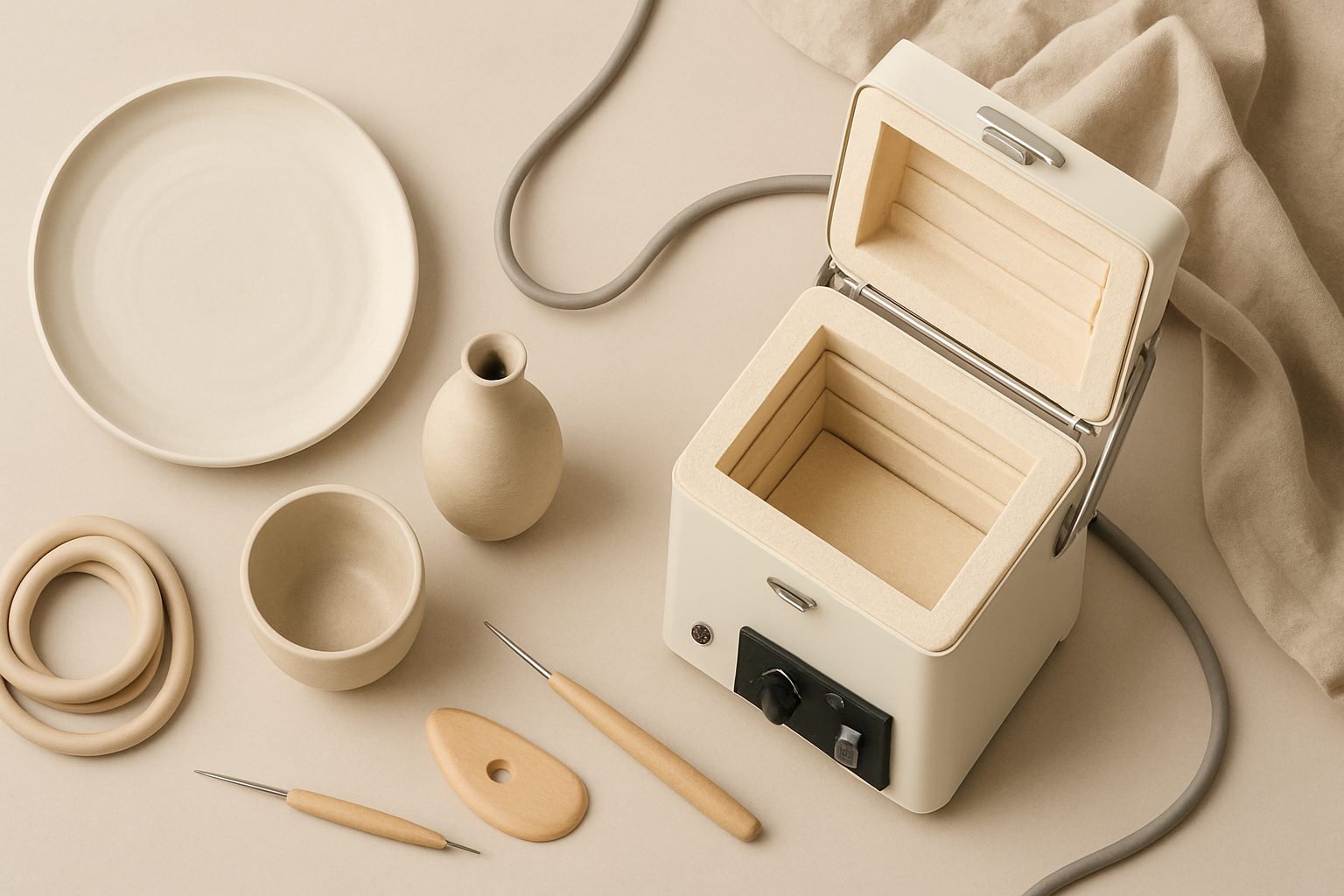
Best Starter Kiln UK for Hobby Potters: Our No-Fuss Recommendation for 2026
Buying your first pottery kiln is a big decision. You want something reliable that won't take over your studio space, heats evenly, and won't bankrupt you if you discover pottery isn't for you. After pottering about (genuinely) with dozens of hobby setups, we're confident about one choice for most UK potters starting out: a mid-range compact electric kiln.
Our Pick: Compact Electric Kiln (40–50L capacity)
Here's what you actually need in a starter kiln:
Specifications that matter:
- Capacity: 40–50 litres (fits standard domestic sockets, reasonable batch size)
- Temperature range: Cone 6–10 (covers earthenware, stoneware, mid-fire glazes)
- Loading height: 30cm+ (isn't absurdly cramped)
- Insulation: Ceramic fibre or brick (mid-range kilns use fibre; faster heat-up, lighter)
- Heating elements: Top and bottom load (even heat, fewer cold spots)
- Controls: Digital kiln-sitter or analogue timer (not crucial, both work)
A well-specified compact electric kiln in the £2,000–2,800 range hits all of these. Brands like Kiln-Kraft, Cromartie, and European imports offer solid options here.
Why This Works for You
Genuine advantages:
- Fits standard 13A domestic wiring (no electrician needed for most homes)
- Fires pottery, stoneware, and glazes — you're not limited as you learn
- Heats to temperature in 6–8 hours, cools enough to open in 12–18 (you can fire overnight)
- Compact enough for a garage corner, garden studio, or spare room
- Resale value is reasonable if you stop (you won't, but still)
Real downsides:
- Electric bills: Expect £15–30 per firing depending on kiln and local rates
- Footprint: You'll need at least 1.5m × 1m floorspace, plus clearance
- Waiting: Pottery always takes longer than you think (firing, cooling, glazing again)
- Dust/mess: Ceramic dust isn't dangerous in hobby quantities, but it does settle
Kiln Specs Breakdown
| Feature | Our Pick | Why It Matters | |---------|----------|----------------| | Interior dimensions | ~45cm wide × 35cm deep × 30cm tall | Fits multiple pieces per batch | | Weight | 80–120kg | Heavy but manageable on a sturdy bench | | Electricity | 3kW–5kW | Runs on standard domestic supply | | Firing time (Cone 6) | 6–8 hours | Leaves room in an evening for overnight cooling | | Insulation type | Ceramic fibre | Stays cooler outside (safer), heats faster | | Shelf space | Three standard shelves included | Standard, buy extras as you go |
Price Tracking
Current UK market (May 2026):
- Entry compact electric kiln: £1,800–2,400
- Mid-range (our recommendation): £2,300–2,800
- Premium compact (thermocouple, better digital controls): £3,000–3,500
Check Amazon UK, specialist pottery suppliers (Cromartie, Potclays), and eBay for second-hand units if budget is tight — kilns are reliable for decades with basic maintenance.
Setting It Up
You don't need much beyond the kiln itself:
- Kiln stand or bench: Sturdy table or metal frame (about £60–150)
- Shelves and stilts: Buy a few extra (kiln-specific, about £10–20 each)
- Pyrometric cones: Essential for checking temperature (about £10 for a pack)
- Kiln furniture glue (like kiln wash): Prevents pieces sticking to shelves
- Plug and cable: Check the kiln includes a UK plug; some don't
You don't need ventilation unless you're in a fully enclosed room — pottery firing produces almost no fumes at these temperatures. A door open or crack of a window is fine.
Will You Actually Use It?
This is the real question. Expect your first batch to take 20–30 hours of studio time (preparing clay, hand-building or throwing, drying, glazing, loading, then unloading). There's no faster way. If that sounds satisfying rather than tedious, a kiln is worth it.
Also Consider
If space is genuinely tight (flat with no workshop): Look at small tabletop kilns (20–30L, £1,200–1,800). You'll reload more often, but they work.
If you want gas: Skip it for now. Gas kilns need flue installation (£500+), more technical knowledge, and ongoing carbon monoxide checks. Start electric, go gas later if you fall in love with wood-firing aesthetics.
If you found a second-hand kiln: Check the heating elements (replacements cost £300–500) and ask why the seller is parting with it. A 10-year-old kiln in good condition is often better value than a budget-brand new one.
The Real Bottom Line
A compact electric kiln is the sensible choice for hobby potters in the UK. It does everything you need, fits in your space, and you won't feel like you've made a reckless commitment. By this time next year, you'll either have discovered you love hand-building vessels and can't stop, or you'll have a very effective bookshelf. Either way, a decent kiln holds its value.
Ready to make the leap? Check stock and current pricing on Amazon UK — reputable sellers ship within 2–3 weeks, and most include delivery.
More options
- Electric Pottery Kilns (Top-Loaders & Front-Loaders) (Amazon UK)
- Tabletop & Small Ceramic Kilns (Amazon UK)
- Kiln Furniture & Shelves (Amazon UK)
- Pyrometric Cones & Kiln Temperature Accessories (Amazon UK)
- Kiln Vent & Ventilation Systems (Amazon UK)