Can You Use a Pottery Kiln in a Flat or Apartment UK? Honest Advice
The short answer: traditional pottery kilns are not practical in most UK flats. But there are workarounds—and one category of kiln genuinely works.
If you're renting or own a small property, the obstacles aren't just about space. Ventilation, building regulations, landlord terms, and fume management create real barriers that most kilns can't overcome. Before you spend money on pottery equipment you can't safely use, here's what you actually need to know.
Why traditional kilns won't work in most flats
A standard electric pottery kiln operates at 1200°C or higher. During firing, it produces heat, moisture, and fumes. Even kilns marketed as "domestic" or "compact" generate significant ventilation demands.
The fume issue is the critical one. Kilns fire clay bodies that release water vapour, organic matter, and sometimes toxic volatiles (particularly if glazes contain lead, cadmium, or other heavy metals—though many UK potters now use lead-free glazes). These aren't passing annoyances; they can accumulate in poorly ventilated spaces and affect air quality for your household and neighbours.
Heat output matters too. A kiln can push 40–50°C into the surrounding room, warping nearby walls and making adequate air conditioning or cooling extremely difficult in a flat. The thermal load alone makes sustained use uncomfortable and inefficient.
Ventilation: the dealbreaker for most apartments
Traditional pottery kilns need dedicated ventilation—a ducted vent leading directly outside. In a flat, this means:
- Installing ducting through external walls (usually prohibited in rental properties, often impossible in multi-unit buildings without building control approval)
- Running ducts through shared spaces (neighbours typically object, landlords won't permit it)
- Relying on passive ventilation through windows (inadequate for kiln fumes, and wastes heating in winter)
Without proper ventilation, fumes linger. If you're firing regularly—even weekly—indoor air quality degrades. You'll notice it: headaches, respiratory irritation, a persistent smell. Your neighbours notice it too, which brings landlord complaints or lease violations.
Some potters attempt workarounds: opening windows, using portable extractors, installing charcoal filters. None of these are effective for kiln firing. Kiln fumes are too hot and voluminous for standard domestic extraction. You'd be gambling with your health and your tenancy.
Landlord permission and tenancy agreements
Most rental agreements in the UK include clauses against structural alterations and changes that affect the property's safety or insurance. Installing a pottery kiln—especially one requiring venting modifications—breaches these terms.
Even if you own the flat, if you're part of a leasehold building, the freeholder and management company usually have say in any installation. Building regulation approval is often required before work begins.
Landlords have good reasons. Kilns increase fire risk, create moisture issues, and can damage surfaces. They also violate many standard insurance policies. Telling your insurer you're firing a pottery kiln inside a flat is likely to void your cover, leaving you liable if anything goes wrong.
Building regulations and electrical safety
Any kiln drawing over 3kW requires electrical inspection and certification. Most pottery kilns draw far more—typically 9–13kW. Your flat's circuits probably aren't designed for that load. Upgrading electrics to support a kiln means calling in a qualified electrician, lodging building control paperwork, and paying for certification.
For flats, this is a serious hurdle. The electrical infrastructure—breaker capacity, circuit separation, earthing—often can't accommodate a kiln without expensive rewiring. Building control approval is nearly impossible to secure for a residential flat kiln installation because the building code prioritises shared safety.
What about balconies and outdoor spaces?
A balcony kiln seems logical—fumes go outside, neighbours below might not notice. It's still not advisable.
Balconies aren't rated for the vibration, heat, and weight of a firing kiln. You risk structural damage and invalidating your insurance. Most flat leases explicitly forbid external installations. Rain and wind make outdoor firing unreliable, and firing in poor weather creates hazards (moisture in the kiln, electrical risks).
For a terrace house with a garden, outdoor placement is more feasible—but you still need proper drainage, weather protection, and neighbours far enough away not to be affected.
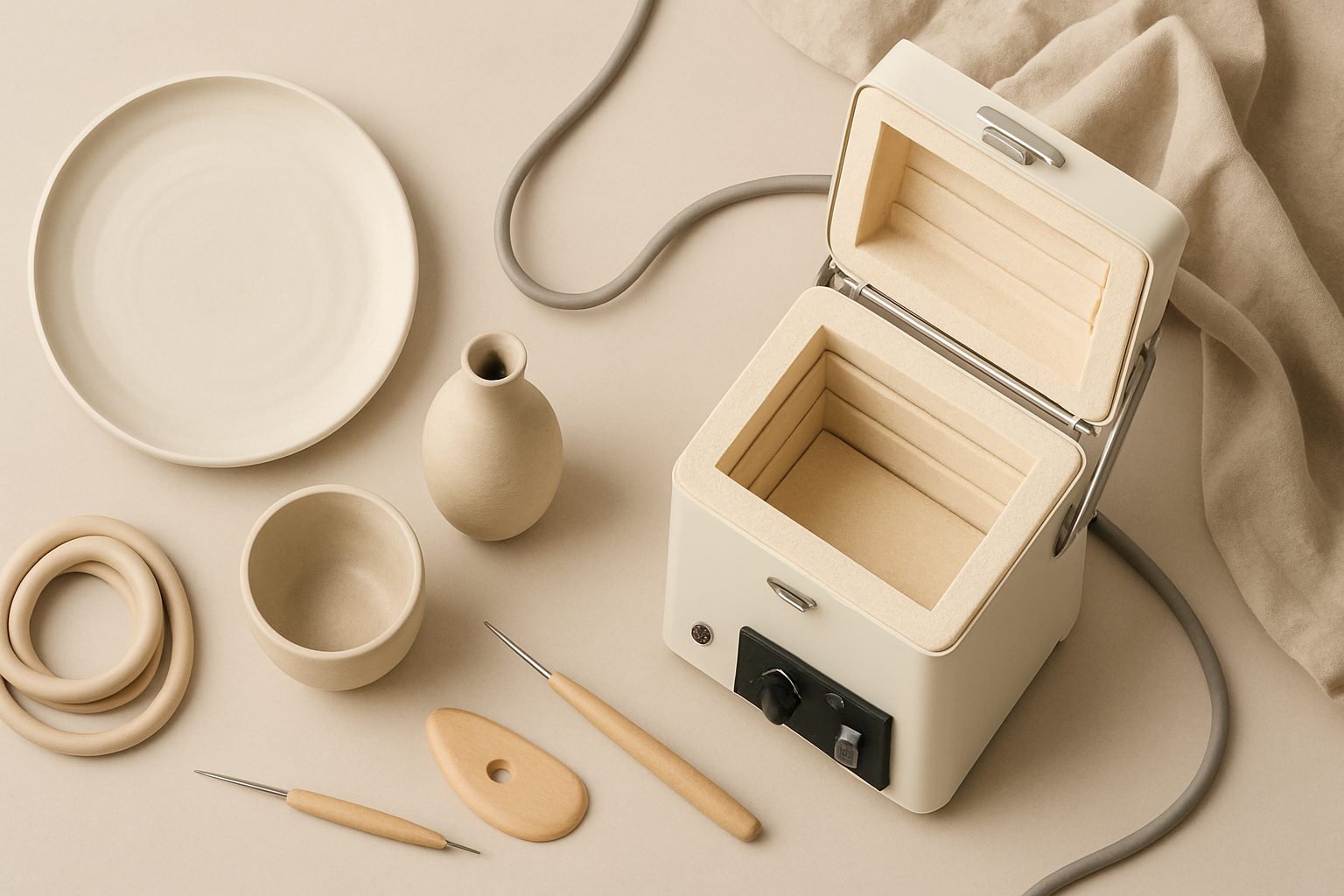
The tabletop kiln solution
There's one kiln type that actually works in flats: small plug-in tabletop kilns, usually 2–4kW, firing at lower temperatures (up to 1100°C).
These kilns are genuinely different from traditional models. They:
- Plug into a standard 13A socket (no electrical upgrade needed)
- Produce minimal fumes due to lower firing temperatures and smaller volume
- Generate far less heat waste
- Fit on a kitchen counter, table, or small shelf
- Fire smaller items: jewellery, decorative pieces, small functional ware
Are there limitations? Yes. You're not firing large plates or sculpted vessels. You can't throw and fire large pots. But if you want to make pottery in your flat, tabletop kilns are the only honest answer.
You'll still want to open a window while firing and ensure the room is reasonably ventilated, but you won't trigger building regulation chaos or landlord conflict.
What to check before buying
If a tabletop kiln seems right for you:
- Check your tenancy agreement explicitly—most allow small electrical appliances
- Confirm your flat's electrics can handle the load (ask a landlord or electrician)
- Verify your home insurance covers ceramics work (most standard policies do)
- Choose a kiln with a thermostat to avoid over-firing and minimise fume risk
- Plan to open windows during firing, even if ventilation feels adequate
The honest takeaway
You can do pottery in a flat. You cannot safely operate a traditional pottery kiln in one. Tabletop kilns are the real solution—they're designed for the constraints that flat-dwelling potters actually face.
If your work requires firing large or ambitious pieces, a flat isn't the right setup. But for many potters—especially jewellers, sculptors working at smaller scale, and experimental glaze workers—a tabletop kiln opens up possibilities you'd otherwise miss.
Ready to find the right kiln for your space? Our guide to the best tabletop pottery kilns for UK homes breaks down the models that actually work in flats, with details on size, cost, and what each one fires best.
More options
- Electric Pottery Kilns (Top-Loaders & Front-Loaders) (Amazon UK)
- Tabletop & Small Ceramic Kilns (Amazon UK)
- Kiln Furniture & Shelves (Amazon UK)
- Pyrometric Cones & Kiln Temperature Accessories (Amazon UK)
- Kiln Vent & Ventilation Systems (Amazon UK)