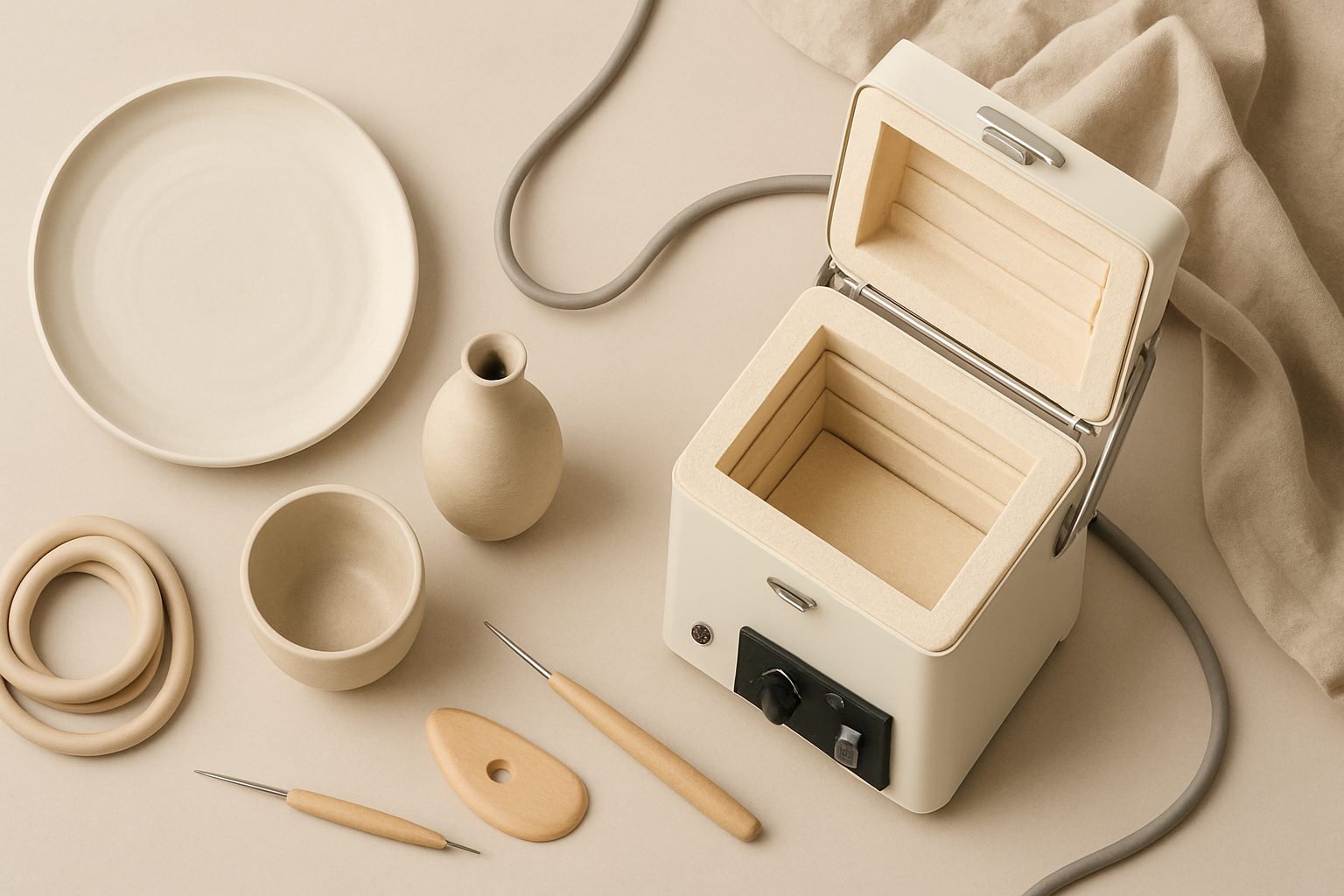
How Much Does It Cost to Run a Pottery Kiln at Home UK? (Real Energy Calculations)
If you're considering setting up a pottery studio at home, the kiln will be your biggest operational expense. Unlike fuel costs or materials, electricity is predictable—so let's work out exactly what you'll spend based on real UK energy prices and kiln specifications.
The Numbers You Actually Need
Your kiln's cost per firing depends on three things: its power rating (kilowatts), how long it runs, and your electricity tariff. Most domestic potters pay between 28p and 35p per kilowatt-hour in May 2026. We'll use 32p as a working figure for these calculations.
The key calculation is simple: kW × firing hours × electricity cost per kWh = cost per firing.
Your kiln's power rating (printed on the spec sheet) tells you how much electricity it draws when heating. This isn't the same as the actual energy cost—a 6kW kiln run for 4 hours uses 24 kWh, not 6 kWh. That's where the maths gets practical.
Small Studio Kiln (1.5–2.5 kW)
Small electric kilns—typically 60–80 litres—are ideal if you fire modest batches or work in tight spaces. Popular models include the Cromartie Kiln Kiln and compact Dental-style units.
Bisque firing (lower temperature, typically Cone 04–06, around 1000°C):
- Runtime: 8–10 hours
- Power draw: 1.8 kW (average)
- Energy used: 1.8 × 9 hours = 16.2 kWh
- Cost per firing: £5.18
Glaze firing (higher temperature, Cone 6–8, around 1220°C):
- Runtime: 6–8 hours
- Power draw: 2.0 kW (full blast at the end)
- Energy used: 2.0 × 7 hours = 14 kWh
- Cost per firing: £4.48
Monthly estimate (if firing twice weekly): £76 in kiln costs alone.
Mid-Range Studio Kiln (4–6 kW)
Most hobby potters moving beyond occasional firing choose 100–150 litre kilns. Brands like Shimpo, Paragon, and Rohde all make reliable mid-range models.
Bisque firing:
- Runtime: 10–12 hours
- Power draw: 4.5 kW
- Energy used: 4.5 × 11 hours = 49.5 kWh
- Cost per firing: £15.84
Glaze firing:
- Runtime: 8–10 hours
- Power draw: 5.5 kW (peaks during heating, tapers during hold)
- Energy used: 5.5 × 9 hours = 49.5 kWh
- Cost per firing: £15.84
Monthly estimate (twice weekly): £254 per month.
The jump from small to mid-range might seem steep, but you're firing 2–3 times more work per kiln load. Your cost-per-pot often stays lower.
Large Studio Kiln (8–12 kW)
Professional or serious amateur setups: 200+ litre capacity. These require a dedicated circuit and cost more to install, but handle serious production.
Bisque firing:
- Runtime: 12–14 hours
- Power draw: 8 kW
- Energy used: 8 × 13 hours = 104 kWh
- Cost per firing: £33.28
Glaze firing:
- Runtime: 9–11 hours
- Power draw: 10 kW
- Energy used: 10 × 10 hours = 100 kWh
- Cost per firing: £32
Monthly estimate (twice weekly): £520 per month.
Real-World Variables That Change Your Costs
Your actual costs will vary. Here's why:
Kiln insulation: Older kilns or poorly maintained ones use 15–20% more energy. Good insulation (fibre lining in decent condition) cuts costs noticeably.
Firing speed: Slow firings use less peak power but run longer. Fast firings spike consumption but finish quicker. The total energy is similar, but rapid firings feel more expensive because the kiln is at full power.
Ambient temperature: Firing in winter costs slightly more because the kiln loses heat to a colder workshop. Summer firings are fractionally cheaper.
Your tariff: Economy 7 rates might save money if you fire overnight (and your kiln is on a separate Economy 7 circuit). Check with your supplier—many modern smart tariffs are cheaper than fixed rates.
Annual Running Costs (Realistic Scenarios)
- Hobbyist (one firing per month, small kiln): £55–60 annually
- Active potter (twice weekly, mid-range kiln): £3,000–3,300 annually
- Semi-professional (three fires weekly, large kiln): £8,000–9,000 annually
These are kiln costs only—not clay, glazes, or studio rent.
Keep Costs Down
Batch your firings. Running the kiln twice a week at capacity costs less per pot than four firings half-full. Well-maintained kilns with good element contact use less energy. If you're building from scratch, a decent mid-range kiln is the sweet spot—small kilns have disproportionate running costs per capacity.
Your electricity provider matters too. Shop around every year; some suppliers now offer pottery-friendly tariffs, though these are still emerging. Monitoring your kiln's performance (element condition, heating consistency) prevents energy waste from ageing equipment.
The cost to run a pottery kiln is real but manageable. Most home potters find the investment worthwhile once they're doing sustained work—the day you throw your hundredth pot, you'll stop counting the electricity bill.
More options
- Electric Pottery Kilns (Top-Loaders & Front-Loaders) (Amazon UK)
- Tabletop & Small Ceramic Kilns (Amazon UK)
- Kiln Furniture & Shelves (Amazon UK)
- Pyrometric Cones & Kiln Temperature Accessories (Amazon UK)
- Kiln Vent & Ventilation Systems (Amazon UK)