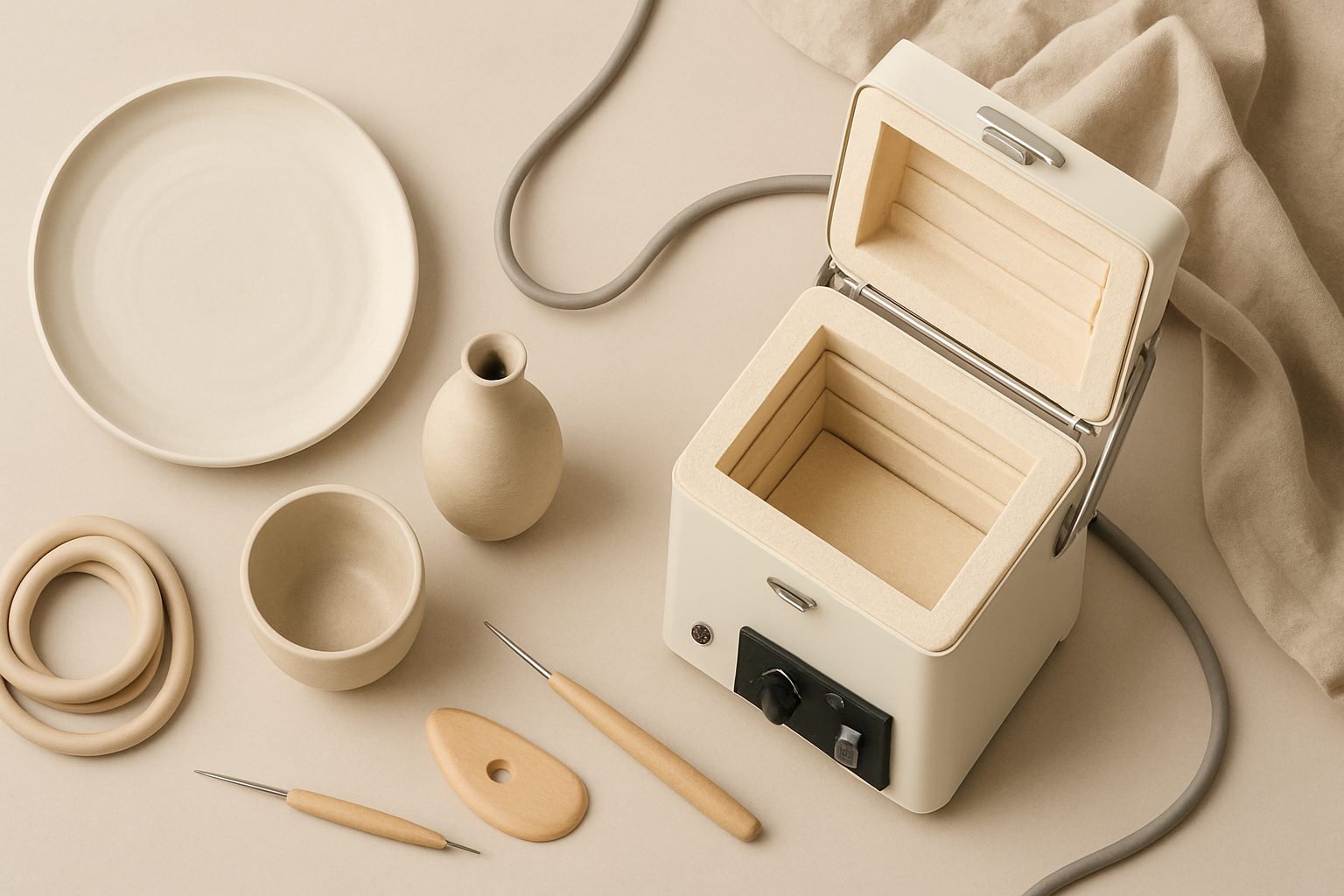
How to Set Up a Pottery Kiln at Home UK: Step-by-Step Safety Guide
Setting up a pottery kiln at home is achievable, but it's not simply a case of plugging it in and firing. A kiln is a high-temperature electrical appliance that demands proper installation, ventilation, and adherence to UK Building Regulations. Done well, you'll have a reliable studio kiln that runs safely for years. Done poorly, you risk fire hazards, poor air quality, and non-compliance that could invalidate insurance or cause problems if you ever sell.
This guide walks through the practical steps to get it right from the start.
Choose Your Location Carefully
Your kiln location determines how much work the rest of the setup entails. The ideal spot is a dedicated outbuilding—a garage, shed, or studio—rather than inside your main home. Kilns generate sustained heat (often 50–100°C ambient rise in an uninsulated space) and can release moisture and fumes even before reaching temperature. An outbuilding also isolates noise and vibration from living areas.
If you must use an indoor space, choose a room you can fully isolate: a spare bedroom, basement, or utility room rather than a kitchen or living area. You'll need distance from flammable materials—the kiln itself doesn't ignite, but heat radiance requires clear space.
Check the room's load-bearing capacity if it's upstairs. A kiln (depending on type) weighs 40–200 kg. An average kiln cart and kiln together easily tops 150 kg, so ensure joists can handle point loading.
Drainage matters too. Concrete floors are ideal; suspended timber needs protection from condensation. If condensation will pool, add a vapour barrier beneath the kiln stand.
Plan for Ventilation
Ventilation is often underestimated. While the pottery itself is inert, firing generates:
- Moisture vapour: clay releases water as it dries and fires, which can condense on walls and metalwork if trapped
- Kiln fumes: incomplete combustion of organic matter in the clay, plus volatilised minerals (especially problematic with glazes containing zinc, lithium, or cadmium), creates fumes that should disperse outdoors
- Heat: sustained warming of a small studio without ventilation becomes uncomfortable and can damage glazes and clay supplies
Install a through-wall extractor fan (ideally 250–500 m³/h, depending on room size and kiln type) ducted to the outside. A low-cost option is a simple passive flue pipe with a weather hood; a more robust approach is an electric extract fan with a thermostat that activates during and shortly after firing. Position the extract outlet at least 1 metre away from windows or doors so vapour doesn't re-enter the building.
For incoming air, leave a door slightly ajar or install a small passive intake vent opposite the extract. Cross-ventilation prevents negative pressure and ensures air circulation.
Electrical Installation and Part P Compliance
This is the step most home potters overlook, but it's non-negotiable for safety and compliance.
Most electric kilns are rated 13 amp (3 kW) to 32 amp (7+ kW). A standard 13 amp plug socket is fine for smaller kilns; anything larger needs a dedicated circuit and proper installation.
For kilns over 3 kW, you must install a dedicated 32 amp circuit from your fusebox to the kiln location. This is a Building Regulations requirement under Part P of the Building Regulations (Electrical Safety). In practice:
- Hire a qualified electrician. Building Regulations Part P states that electrical work in kitchens, bathrooms, and circuits over 3.68 kW must be carried out by a "competent person"—typically a Part P registered electrician. Some work in other areas can be DIY, but kiln circuits almost always require certification.
- Install a 32 amp double-pole switch between the fusebox and the kiln. This isolates the kiln and is required for safety.
- Use appropriate cable: 6mm² 4-core cable (live, neutral, earth, and a second earth for redundancy) run in conduit or trunking to the kiln. Never run cable across floors where it can be damaged; run it within walls, under floorboards, or via conduit.
- Obtain certification. Your electrician will issue an EICR (Electrical Installation Condition Report) or a completion certificate. Keep this for insurance and resale. If you ever sell the property, missing certification can be a deal-breaker.
For small 13 amp kilns, a standard socket is acceptable, but run the kiln alone on that circuit—don't share it with heaters or other high-draw appliances, as this can cause nuisance tripping or fire risk.
Earthing and RCD Protection
Proper earthing is essential. All metal parts of the kiln—the kiln frame, stands, and control box—must be earthed. This is done via the cable earth wire (the green/yellow conductor). The earthing must ultimately connect to your property's main earth.
Additionally, install an RCD (residual-current device) on the kiln circuit if one isn't already in your fusebox. An RCD trips the circuit within 30 ms if current leaks to earth, protecting against electric shock. Most modern boards have RCD protection; older fusebox installations may not. Discuss this with your electrician.
First-Fire Checklist
Before you fire your kiln, run through these checks:
- Kiln is level: use a spirit level. An unlevel kiln can shift, cracking shelves and warping ware.
- Ventilation is working: switch on the extract fan and confirm airflow; close a door to feel draught direction.
- Electrical isolation switch is accessible: you should be able to kill power quickly in an emergency.
- No obstructions: ensure at least 30 cm clearance on all sides of the kiln (check your manual for your specific model).
- Shelves and stilts are rated for your kiln's temperature: unrated shelves will warp or break.
- You've done a slow dry-fire: many potters run the kiln on low overnight (8–12 hours) to expel remaining moisture and cure the electrical elements. This prevents thermal shock and early element failure.
Document your installation: take photos of the electrical circuit, the ducting, and the final setup. This is useful for insurance claims and future reference.
Next Steps
Once your kiln is installed and your first pots are safely fired, you'll want to consider accessories—kiln furniture, pyrometers, and kiln wash are covered in our dedicated accessories guide.
The upfront effort and cost of proper installation pays dividends. You'll fire with confidence, knowing your setup is safe and compliant.
More options
- Electric Pottery Kilns (Top-Loaders & Front-Loaders) (Amazon UK)
- Tabletop & Small Ceramic Kilns (Amazon UK)
- Kiln Furniture & Shelves (Amazon UK)
- Pyrometric Cones & Kiln Temperature Accessories (Amazon UK)
- Kiln Vent & Ventilation Systems (Amazon UK)