What Electricity Supply Does a Pottery Kiln Need in the UK? (13 A vs 32 A vs 3-Phase)
The electricity supply you have available at home is often the first practical constraint when buying a pottery kiln—even before budget or space. A small tabletop model might run from your existing 13 A socket, while a mid-sized kiln needs a dedicated 32 A circuit installed. Larger studio kilns demand 3-phase power, which requires checking whether your property can even support it. Getting this wrong means wasted money on a kiln you can't actually use, or an expensive rewire mid-project.
This guide explains what each supply option means in practice, which kiln sizes fit which circuits, and what you're realistically looking at for installation costs in the UK.
13 A Socket Kilns: Running Your Kiln from a Standard Plug
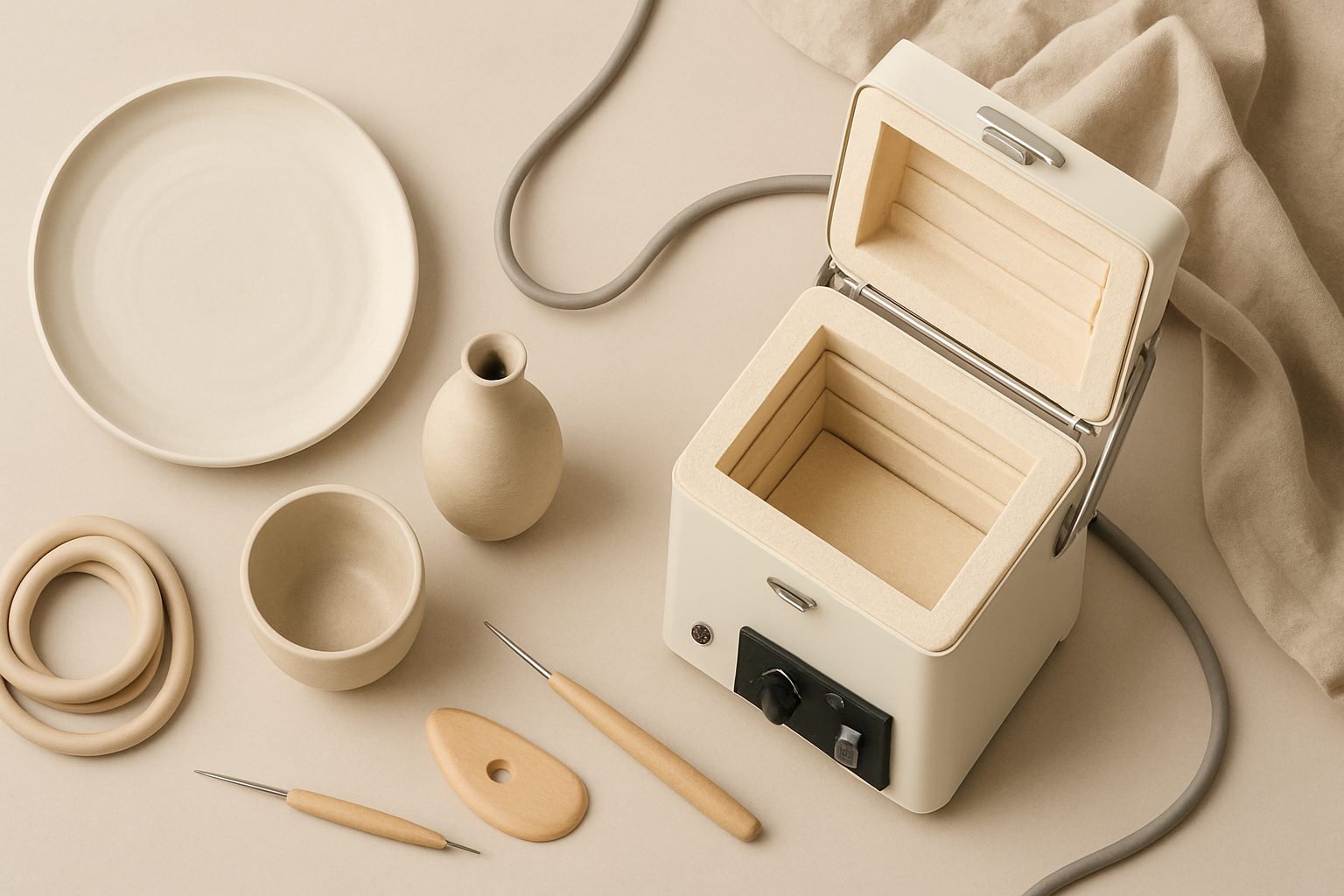
The simplest option is a kiln that runs on a standard 13 A UK socket. This means no electrician, no rewiring, and no waiting for installation. These kilns are almost always small tabletop or hobby models with a maximum power draw of around 3 kW.
Small electric kilns rated at 1–3 kW can typically plug straight into any spare 13 A socket in your home. This works well if you're a beginner potter testing whether pottery is a long-term hobby, or if you have very limited space. Many people run these from a kitchen corner, garage, or shed without drama.
The catch is that a 13 A circuit is designed for intermittent use (a kettle, a drill), not continuous heating. While a kiln won't break the circuit if it's the only thing plugged in, running it alone on a dedicated outlet is safer. Firing schedules typically last 6–12 hours at full power, and the breaker may trip if other appliances are drawing power elsewhere on the same circuit.
In practical terms: if you're firing a 1.5–2 kW kiln, you can get away with a standard socket provided nothing else in the house is using that circuit's power. If you're at the upper end (2.5–3 kW), a dedicated socket on its own circuit breaker is worth requesting from an electrician (usually a £200–400 job).
32 A Dedicated Circuit: The Sweet Spot for Home Studios
Most home potters step up to a 32 A circuit. This covers mid-sized kilns in the 5–8 kW range—the models that fire chamber volumes from 40–100 litres. These are the bread-and-butter kiln sizes: big enough to be genuinely useful, compact enough to fit a garage or studio corner.
A 32 A circuit means a dedicated run of cable from your consumer unit (fuse box) to the kiln location, with its own breaker and usually a wall-mounted socket rated for the load. The UK standard is a red industrial-style 32 A 3-pin socket, which looks professional and is exactly what electricians expect to wire.
The installation typically costs £400–800 depending on:
- Distance from the consumer unit — further away means more cable, so £40–60 per metre of run
- Whether cable can run in trunking or needs burying — surface-mounted is cheaper; buried in walls is pricier
- Current electrics — if your consumer unit is already full or your house has aged wiring, upgrading becomes more complex
- Building Control — some local authorities require sign-off on circuits over 32 A; most electricians include this in their quote
A 32 A circuit is the standard for hobby studios and semi-professional home setups. It's robust enough that you can run the kiln without worrying about tripping breakers or sharing the load, and future-proof enough that you can upgrade to a slightly larger kiln later without rewiring.
3-Phase Power: For Larger Studio Kilns
3-phase power supplies three alternating currents instead of one, which allows kilns to run more efficiently at higher power levels (10–20+ kW). This is the standard for professional studio kilns and pottery schools.
The problem is access. Most UK domestic properties only have single-phase supply. Getting 3-phase installed at home usually requires an engineer from your DNO (Distribution Network Operator—your electricity supplier's infrastructure arm) to run it from the street to your house. This is expensive: typically £2,000–6,000+ for the supply itself, plus electrician costs to wire it in.
You'll only consider 3-phase if you're running a serious home studio, teaching pottery, or planning production runs. For hobby potters, the cost is rarely justified unless you already have access to it (e.g., you're in a commercial building or agricultural property).
What You Need to Know Before Buying
Check your actual electrics first. Before choosing a kiln, ask your sparky (electrician) what's realistic for your setup. Many home potters assume they need rewiring and get a quote, only to find a 32 A circuit costs less than expected. Others buy a kiln and then discover their consumer unit is full.
Kilns rarely come with UK plugs. Most kilns arrive with bare terminals or a European CEE connector. Your electrician will wire it into the appropriate socket or hardwire it directly into the consumer unit. Budget for this.
Understand kiln power ratings. Kilns are rated in kilowatts (kW)—the electrical power they draw at full heat. A 5 kW kiln needs roughly 5 kW ÷ 230 V = 22 amps continuous, which fits comfortably on a 32 A circuit with margin. Smaller kilns use less; larger ones need more.
Rewiring isn't reversible—plan ahead. If you install a 32 A circuit for a 6 kW kiln, you're committed to using that location for kilns. Moving it later means either running an ugly extension lead (not recommended) or rewiring again.
Putting It Together
For a beginner or space-limited potter, a 13 A socket kiln under 2.5 kW is quick and low-cost. If you're serious about pottery, a 32 A dedicated circuit and a 5–8 kW kiln is the practical standard for UK home studios, costing £400–800 to install and giving you years of reliable use. 3-phase is for those building serious kilns or teaching.
The key is matching your kiln size to your electrics before you buy, not after. A quick chat with a local electrician costs nothing and saves months of frustration.
More options
- Electric Pottery Kilns (Top-Loaders & Front-Loaders) (Amazon UK)
- Tabletop & Small Ceramic Kilns (Amazon UK)
- Kiln Furniture & Shelves (Amazon UK)
- Pyrometric Cones & Kiln Temperature Accessories (Amazon UK)
- Kiln Vent & Ventilation Systems (Amazon UK)